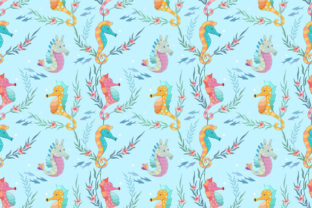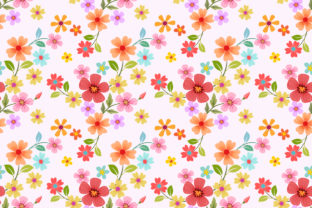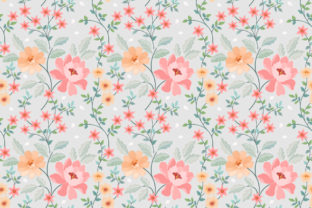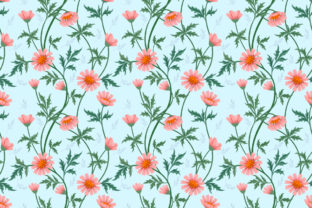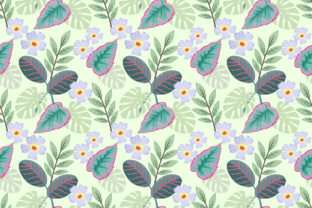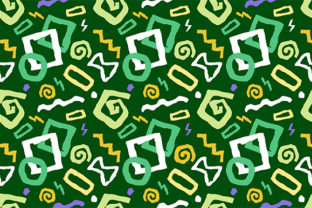
Colorful Seamless Doodle Art Pattern
A Colorful Seamless Doodle Art Pattern is a repeatable digital design composed of hand-drawn or digitally rendered doodle elements—such as whimsical florals, abstract lines, playful icons, and organic shapes—arranged to tile infinitely without visible seams. Unlike static illustrations, this pattern is engineered so that its edges align precisely when repeated horizontally and vertically, making it suitable for continuous surface coverage.
This type of pattern is commonly delivered in two key formats: a high-resolution JPEG for immediate preview and broad compatibility, and an editable vector-based .EPS file for scalable use in professional design workflows. The JPEG ensures fidelity for mockups, presentations, or web previews, while the .EPS preserves crispness at any size—essential for fabric printing, large-scale wallpaper production, or precise textile layout.
Why Designers and Makers Consider This Pattern
Individuals exploring surface design often seek assets that balance visual energy with functional versatility. A Colorful Seamless Doodle Art Pattern appeals across several practical needs:
- Fabric and textile designers looking for lively, non-repetitive-feeling prints that retain handmade charm;
- Stationery and packaging creators needing engaging, youthful backgrounds for gift wrap, greeting cards, or product labels;
- Interior designers and DIY decorators sourcing distinctive wallpaper or backdrop options for nurseries, creative studios, or retail spaces;
- Surface designers building libraries of licensable, commercially safe patterns for platforms like Spoonflower or Adobe Stock;
- Educators and hobbyists wanting accessible, ready-to-use files for craft projects, classroom activities, or personal branding experiments.
Practical Benefits and Realistic Tradeoffs
The primary benefit lies in efficiency: users avoid the time-intensive process of constructing seamless repeats from scratch. A well-made Colorful Seamless Doodle Art Pattern comes pre-tested for tiling integrity—no gaps, misalignments, or unintended visual breaks at tile boundaries. Its color-rich palette supports emotional resonance (e.g., warmth, playfulness, curiosity), and the doodle aesthetic conveys approachability and creativity without requiring photorealism.
However, tradeoffs exist. Because doodle art relies heavily on line work and irregular forms, scaling the pattern too small may cause detail loss—especially in JPEG format where resolution is fixed. Conversely, extremely large-scale applications (e.g., mural-sized backdrops) benefit more from the vector .EPS, but only if the original artwork was built with clean paths and minimal raster effects. Users should verify whether the .EPS contains embedded raster images or true vector paths—this affects editability and output quality.
Another consideration is color management. Bright, saturated palettes common in doodle patterns may shift slightly across devices or print processes. Soft-proofing in CMYK before textile or wallpaper production helps anticipate these variations. Also, while the pattern is “seamless,” its visual rhythm may still produce noticeable motif repetition over large surfaces; spacing and scale testing in context remains essential.
Situations Where This Pattern Is a Strong Fit
A Colorful Seamless Doodle Art Pattern works especially well when:
- The intended use prioritizes expressive, non-corporate aesthetics—such as children’s apparel, indie brand packaging, or educational materials;
- Time or technical skill limits prevent building custom seamless repeats in software like Adobe Illustrator or Affinity Designer;
- The project calls for consistent visual language across multiple touchpoints (e.g., matching fabric, wrapping paper, and website background);
- Print-on-demand platforms are used, and the file meets platform requirements (e.g., 300 DPI JPEG, RGB or CMYK color mode, correct dimensions like 6000×6000 px);
- The audience responds positively to illustrative, human-centered visuals rather than minimalist or photographic styles.
When Alternatives May Be More Appropriate
This pattern is less ideal when:
- Subtlety or sophistication is required—for example, luxury branding, corporate interiors, or formal stationery, where intricate doodles may feel visually busy or inconsistent with tone;
- Monochrome or limited-color applications dominate the project, since colorful doodle patterns rely on chromatic variety for impact;
- High-precision geometric alignment matters more than organic flow—doodle-based patterns emphasize spontaneity over strict symmetry or grid-based structure;
- The end use demands texture simulation (e.g., linen, watercolor grain) that a flat vector or JPEG cannot replicate without additional layering or post-processing;
- Customization beyond recoloring or scaling is needed, such as rearranging individual doodle elements—unless the .EPS includes ungrouped, editable layers.
Making an Informed Decision
Before acquiring a Colorful Seamless Doodle Art Pattern, evaluate your workflow and output goals. Ask: Does the JPEG resolution match your largest intended use? Does the .EPS contain layered, labeled objects—or is it flattened? Are colors provided in both RGB and CMYK, or is conversion needed? Reviewing technical documentation or contacting the creator for clarification helps avoid surprises during production.
Also consider licensing terms. Some files permit commercial use with attribution; others require extended licenses for resale items like printed fabrics or physical goods. Verify whether the license covers your specific application—especially important for entrepreneurs producing merchandise or designers working under client contracts.
Finally, assess stylistic cohesion. Even a technically flawless pattern falls short if its doodle motifs clash with your brand voice or existing design system. Test it alongside typography, photography, and other graphic elements in a real layout—not just as a standalone swatch.
In summary, a Colorful Seamless Doodle Art Pattern offers practical utility and expressive appeal for makers who value both efficiency and personality in surface design. Its strength lies not in universal applicability, but in targeted suitability—particularly where vibrancy, informality, and scalability intersect with real-world production constraints. Understanding its capabilities—and limits—helps ensure it serves your purpose without requiring extensive adaptation.