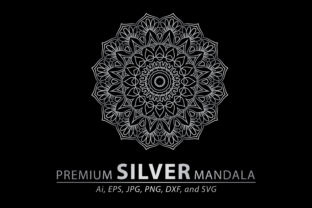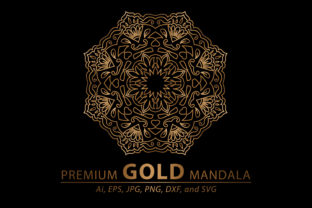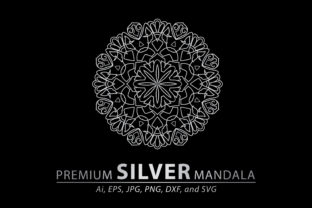
Mandala Vector Art Pattern Black 3: Precision, Contrast, and Purposeful Design
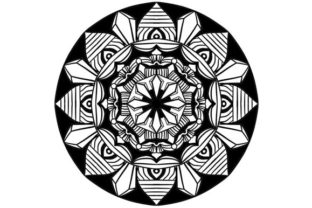
Black isn’t just a color in modern visual culture—it’s a statement of clarity, focus, and intentional minimalism. Mandala Vector Art Pattern Black 3 embodies that shift: a refined, high-contrast vector mandala built for real-world application—not just decoration, but functional design. Unlike ornamental iterations that prioritize density over usability, this pattern balances intricate symmetry with clean negative space, scalable precision, and immediate visual authority. It’s not merely “black mandala art”; it’s a tool calibrated for today’s workflows, where speed, adaptability, and aesthetic cohesion matter more than ever.
Why This Version Stands Apart—Beyond Aesthetics
Vector mandalas have long served spiritual, therapeutic, or decorative roles—but Mandala Vector Art Pattern Black 3 reflects a broader evolution in how professionals approach visual assets. Designers no longer treat patterns as static backdrops. They’re modular components: embedded in brand guidelines, layered into UI kits, repurposed across print and digital touchpoints, or adapted for laser-cut textiles and packaging. What makes this variant especially relevant is its deliberate restraint. The black-on-transparent construction eliminates color-matching friction, ensures legibility on any background (light or dark), and reduces file size without sacrificing fidelity. That’s not stylistic preference—it’s operational efficiency.
Consider a freelance illustrator preparing assets for a wellness app launch. They need consistent iconography, loading screens, and social media banners—all aligned visually but adaptable to variable screen sizes and platform constraints. A complex, multi-color mandala would require manual recoloring, layer adjustments, and export variations. With Mandala Vector Art Pattern Black 3, one SVG file scales infinitely, imports cleanly into Figma or Adobe XD, and integrates seamlessly into CSS animations or React components. No conversion loss. No version drift.
How Creative Workflows Are Changing—and Why Simplicity Wins
The rise of no-code tools, AI-assisted design, and cross-platform publishing has reshaped expectations around asset reuse. Users no longer want “pretty files”—they want predictable files. A mandala pattern must behave the same way in Canva as it does in InDesign or Blender. It must retain crisp edges at 24px and 2400px. It must support transparency without rasterization. That’s where vector specificity matters—and where Mandala Vector Art Pattern Black 3 delivers consistency by design.
This aligns with observed shifts among educators building online courses, small business owners updating Shopify themes, or marketers producing LinkedIn carousels. Time is scarce. Cognitive load is high. Every extra step—re-exporting, troubleshooting clipping masks, adjusting stroke weights—adds friction. A well-structured black vector pattern removes ambiguity. Its uniform stroke weight, optimized anchor points, and grouped layers mean less time troubleshooting and more time iterating on messaging, layout, or user experience.
From Symbol to System: Mandala Patterns in Brand and Identity Work
Mandalas are increasingly adopted not as standalone motifs but as foundational elements within visual systems. Brands in wellness, mindfulness, education, and even fintech use them to signal balance, structure, and intentionality—values that resonate across demographics. But generic mandala art often lacks strategic flexibility. A busy, detailed pattern overwhelms small interfaces; a low-resolution version pixelates on retina displays; a non-vector version fails accessibility checks.
Mandala Vector Art Pattern Black 3 answers those constraints. Its geometry supports systematic adaptation: rotate it 90° for a dynamic background tile; isolate a quadrant for an icon or watermark; apply subtle opacity for depth without muddying contrast. One designer recently used it as a repeating motif in a client’s presentation deck—subtly embedded in slide headers, then extracted and animated as a transition element between sections. Because it was vector-based and monochrome, the entire process took under 15 minutes—no reworking, no licensing concerns, no compatibility hiccups.
Real-World Use Cases Across Professions
- Bloggers & Content Creators: Embed the pattern as a subtle watermark on original illustrations or infographics—visible enough to deter casual copying but unobtrusive when viewed at scale.
- Educators: Import into interactive whiteboard software to annotate symmetry concepts, rotational angles, or radial geometry—without worrying about blurry zoom or mismatched colors.
- Print-on-Demand Entrepreneurs: Apply directly to apparel mockups using transparent PNG exports; the sharp black lines hold up on cotton, polyester, and ceramic surfaces alike.
- UX Writers & Product Managers: Use as a neutral, non-distracting background for wireframe annotations—enhancing readability while reinforcing a calm, centered tone.
- Hobbyists & Makers: Import into Cricut Design Space or Silhouette Studio for precise vinyl cutting, embroidery digitizing, or stencil creation—no tracing or cleanup needed.
What’s Driving Renewed Interest in Mandala Vector Art Patterns?
It’s not nostalgia—it’s necessity. As digital fatigue grows, users gravitate toward visuals that feel grounded, intentional, and human-scaled. Mandalas offer inherent rhythm and balance, countering the visual noise of infinite scroll and algorithmic feeds. But unlike hand-drawn or raster versions, vector mandalas like Mandala Vector Art Pattern Black 3 meet modern technical standards: WCAG-compliant contrast ratios, SVG accessibility attributes (like aria-label support), and compatibility with responsive frameworks.
We’re also seeing demand shift from “unique” to “usable.” A creator might license dozens of mandala patterns—but if only two integrate smoothly into their existing toolkit, the rest gather digital dust. That’s why clarity of structure matters more than decorative novelty. This pattern’s clean paths, logical layer naming (where applicable), and absence of embedded fonts or effects make it interoperable—not just today, but as tools evolve.
Practical Tips for Getting the Most From This Pattern
- Test scalability early: Zoom to 400% in your design app—look for stray anchors or inconsistent strokes. Mandala Vector Art Pattern Black 3 should remain razor-sharp.
- Leverage transparency intentionally: Overlay it on gradients or photos at 10–20% opacity to add texture without competing for attention.
- Repurpose thoughtfully: Don’t stretch or skew the pattern—rotate, mirror, or tile instead. Symmetry is its strength.
- Pair with restrained typography: Use geometric sans-serifs (e.g., Inter, Manrope) or low-contrast serifs to maintain visual harmony—avoid overly decorative fonts that clash with the pattern’s precision.
- Document usage context: Note where and how you’ve applied it across projects. Consistency builds recognition—even with abstract forms.
Looking Ahead—Not Just Trends, But Tools That Endure
Design trends come and go—glass morphism fades, neumorphism pivots—but the need for reliable, ethical, and technically sound visual assets remains constant. Mandala Vector Art Pattern Black 3 doesn’t chase novelty. It anticipates durability: compatibility with upcoming SVG 2 features, support for dark-mode CSS variables, and alignment with emerging design system principles like token-driven theming.
That’s the quiet advantage of thoughtful vector work. It’s not flashy—but it saves hours. It doesn’t shout—but it communicates coherence. And while other patterns may dazzle briefly, this one stays open in your layers panel, ready when you need structure, contrast, or calm—without compromise.
Whether you're refining a brand identity, building a course module, prototyping an interface, or simply seeking visual language that feels both contemporary and timeless, Mandala Vector Art Pattern Black 3 represents a practical evolution—not just in form, but in function.