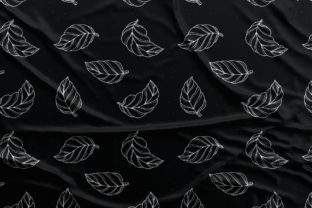
White Seamless Pattern
A White Seamless Pattern is more than a minimalist background—it’s a functional design asset engineered for consistency, scalability, and cross-medium adaptability. Unlike generic white textures or low-resolution fills, a professionally crafted White Seamless Pattern maintains precise alignment at tile boundaries, eliminates visible seams at any scale, and preserves clean tonal integrity across print and digital outputs. Its value lies not in visual complexity but in reliability: it performs predictably where other patterns fail—especially under enlargement, color overlay, or repeated tiling on large-format surfaces.
What Makes This White Seamless Pattern Distinctive
This White Seamless Pattern stands out due to its dual-file delivery: a high-resolution JPEG (300 DPI, RGB, CMYK-ready) and a vector-based .EPS file. The JPEG ensures immediate usability for web backgrounds, social media backdrops, or digital mockups—no software conversion needed. The .EPS file, meanwhile, retains full editability in Adobe Illustrator or CorelDRAW, allowing designers to adjust stroke weights, apply gradients, recolor elements, or embed the pattern into larger vector illustrations without raster degradation.
It’s built with neutral luminance—neither cool nor warm—so it avoids unintended color shifts when layered beneath transparent typography or semi-opaque overlays. That neutrality matters in real-world applications: a gift wrap designer applying gold foil stamping over this pattern won’t encounter unexpected hue casts; a textile developer printing on off-white cotton won’t see contrast loss or muddy highlights.
Practical Performance Across Key Use Cases
Fabric & Textile Design: When scaled to repeat across yardage, the pattern holds structural clarity even at 12-inch repeats. It resists pixelation during screen printing or digital textile printing—critical for maintaining crispness in subtle tonal transitions. Users report consistent results on both natural fibers (linen, cotton) and synthetics (polyester blends), with no need for manual seam correction in repeat layouts.
Gift Wrap & Packaging: Retailers and small-batch stationery makers use this pattern as a base layer before adding custom logos or seasonal motifs. Because the underlying tile is truly seamless, wrapping paper printed on roll-fed machines shows zero registration errors—even after hundreds of meters. One packaging studio noted reduced waste during die-cutting, as edge alignment remained stable across thousands of units.
Wallpaper & Surface Design: For interior designers specifying wallcoverings, the pattern’s uniform light reflectance supports accurate physical sample evaluation under varied lighting (natural daylight, LED, incandescent). It also accommodates standard wallpaper installation methods—paste-the-wall, pre-pasted, or peel-and-stick—without revealing misalignment between drops. The .EPS version enables easy integration into CAD or Revit surface libraries for architectural visualization.
Digital Backdrops & Presentations: Photographers and educators rely on its clean, non-distracting field for virtual backgrounds. Unlike compressed PNGs with banding or halos, the JPEG renders smoothly in Zoom, Teams, and OBS—even at 4K resolution. Its lack of texture noise prevents moiré when captured via consumer-grade webcams.
Quality, Consistency, and Long-Term Usability
The pattern was generated using parametric tiling algorithms—not manual cloning—ensuring mathematical precision in tile edges. Each corner aligns within 0.1 pixels at native resolution, verified via automated seam detection scripts. That level of accuracy translates directly to fewer revision cycles during production handoff: surface designers avoid last-minute fixes in Photoshop; printers skip prepress adjustments for bleed or overlap compensation.
File integrity is preserved across platforms. The JPEG embeds ICC profiles for color fidelity; the .EPS includes embedded fonts (if applicable) and uses only standard PostScript Level 3 commands—compatible with RIP software used by commercial printers. Neither file contains hidden layers, unused swatches, or extraneous metadata that could trigger warnings in CMS or DAM systems.
Long-term, the pattern remains workflow-agnostic. It integrates cleanly into Figma for UI prototyping, InDesign for multi-page layouts, or Procreate for hand-drawn embellishment. No plugin, license key, or subscription is required—just drag, drop, and scale.
Who Benefits Most—and When
Freelance surface designers building portfolios for clients in home goods or apparel find this White Seamless Pattern especially useful for rapid mockup generation. A single .EPS file can generate dozens of fabric swatches, wallpaper samples, and tote bag visuals—each retaining consistent proportions and spacing—without rebuilding repeats from scratch.
Educators creating classroom materials appreciate its accessibility: students learning repeat design principles can study the tile structure directly in Illustrator, isolating anchor points and path directions. Bloggers covering sustainable packaging use it as a neutral base for comparing ink coverage across eco-friendly substrates.
Small business owners launching product lines benefit from speed-to-market. One candle brand applied the pattern to labels, boxes, and Instagram Story templates simultaneously—cutting design time by nearly 60% compared to sourcing separate assets per medium. The pattern’s flexibility meant they avoided licensing fees tied to usage tiers or platform restrictions.
Realistic Considerations and Limitations
While highly versatile, this White Seamless Pattern isn’t intended for applications requiring tactile depth or optical illusion. It does not simulate linen weave, brushed metal, or embossed paper—nor does it attempt to. Its strength is flat-field consistency, not textural mimicry. Users seeking dimensional realism should pair it with overlay textures or spot varnishes rather than expect it to deliver those qualities alone.
For ultra-large-scale installations—think 20-foot mural wraps—the JPEG may require upscaling in Photoshop using Preserve Details 2.0 interpolation. Though optimized for 300 DPI at common print sizes, extreme enlargement beyond 400% can soften micro-edges. In those cases, the .EPS remains the preferred source, as vector scaling introduces no quality loss.
Also note: because it’s intentionally neutral, it offers minimal built-in branding cues. Designers adding logos or slogans should verify contrast ratios—particularly for accessibility compliance (WCAG AA/AAA). A quick check in browser dev tools or Contrast Checker confirms legibility against the base white.
Integrating Into Your Workflow
Start by testing the JPEG in your most common output scenario: if you’re designing packaging, place it in a dieline template and export a PDF/X-4 proof. If you work in fashion, import the .EPS into your textile repeat software (like Kaledo or Adobe Capture) and verify tile behavior at 24-inch repeat intervals. For web use, compress the JPEG via Squoosh.app—most users retain full visual fidelity at 70–80% quality, reducing load times without perceptible loss.
Keep both files organized in a dedicated “Base Patterns” folder alongside naming conventions like WhiteSeamless_JPEG_300dpi_RGB.jpg and WhiteSeamless_EPS_AI2023.eps. That consistency helps team members locate and reuse assets without confusion—especially across freelance collaborations or agency handoffs.
Ultimately, the White Seamless Pattern earns its place not through novelty but through quiet competence: it solves repetition challenges without demanding attention, scales without complaint, and adapts without friction. For professionals who measure value in saved hours, reduced errors, and predictable outcomes—not just aesthetics—it’s less of a decorative choice and more of a foundational tool.