Moon Leaf Pattern: Seamless & Versatile
Imagine a design element that feels both grounded and ethereal—soft curves echoing lunar phases, delicate foliage suggesting quiet growth, and a rhythm that flows endlessly across any surface. That’s the Moon Leaf Pattern: a thoughtfully crafted seamless tile built for real-world use, not just aesthetic appeal. It’s not just another background or texture—it’s a flexible visual tool designed to work quietly but effectively in dozens of everyday contexts.
What Makes This Pattern Different?
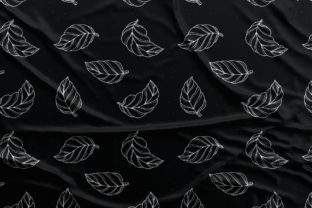
At its core, the Moon Leaf Pattern is a repeatable graphic unit where edges align perfectly—no visible seams, no awkward breaks. Unlike static illustrations or cropped photos, it scales effortlessly from a smartphone wallpaper to a 10-foot trade show banner. What sets it apart is how it balances organic form with clean structure: subtle crescent-shaped leaves arranged in gentle arcs, rendered in soft tonal gradients or crisp line art, depending on the version.
It comes in five carefully considered combinations—each pairing distinct leaf silhouettes with complementary color palettes and spacing rhythms. One might feature muted sage and clay tones with open spacing for breathable layouts; another uses deep indigo and silver for high-contrast digital interfaces. These aren’t random variations—they’re intentional options built around real usage needs.
Why People Reach for Moon Leaf Pattern
Whether you're designing a wellness blog header, prepping a Canva presentation for a client pitch, or printing custom stationery for your small business, consistency matters—and so does speed. The Moon Leaf Pattern removes guesswork. You don’t need advanced design skills to layer it behind text, crop it for social posts, or adapt it as a subtle watermark. Its seamless nature means you can resize, rotate, or recolor without breaking continuity.
Beginners appreciate how little setup it requires. Professionals value how reliably it performs across formats—PNG, SVG, and high-res JPEG versions are typically included, each optimized for web, print, or vector editing. Educators use it to add visual calm to handouts; freelancers embed it into proposal templates to reinforce brand tone; bloggers apply it as background overlays on quote graphics to soften harsh white space.
Real Uses You’ll Recognize
- Website & App UI: As a soft background for hero sections, newsletter signup forms, or dashboard cards—especially where a natural, calming vibe supports content about mindfulness, sustainability, or holistic health.
- Digital Content: Layered beneath Instagram carousels, used as repeating borders in Notion templates, or animated subtly behind explainer videos.
- Print & Merchandise: Wrapped around packaging for herbal teas or artisan candles, printed on fabric for tote bags or notebook covers, or scaled down as a watermark on PDF reports.
- Educational Materials: Applied to slide decks for teacher training workshops, embedded in student worksheets as decorative dividers, or used as consistent headers across a course module series.
- Personal Projects: Customizing Zoom backgrounds, designing printable wall art for home offices, or adding texture to handmade greeting cards.
Getting Started Is Genuinely Simple
No plugins. No subscriptions. Just download, drag, and adjust. Most users begin by opening their preferred tool—Canva, Figma, Adobe Express, or even Google Slides—and uploading one of the five Moon Leaf Pattern files. From there, it behaves like any other image: resize to fill, set transparency, overlay text with contrast-friendly fonts, or use blending modes to integrate it more deeply into your layout.
If you’re using it in print, check resolution requirements first—most versions include 300 DPI options ideal for brochures or business cards. For web use, PNGs with transparent backgrounds offer maximum flexibility, especially when layering over colored sections or images. And because the pattern repeats cleanly, you rarely need to tile manually; most design tools handle tiling automatically when you set the image as a fill.
Things Worth Keeping in Mind
While the Moon Leaf Pattern is built for ease, thoughtful application still matters. Consider contrast: light-colored versions may fade against pale backgrounds, while dark variants can overwhelm delicate typography if not balanced with enough white space. Also, remember context—its gentle, botanical-lunar aesthetic shines in wellness, education, creative, or lifestyle settings but may feel mismatched in highly technical or corporate-heavy environments unless intentionally softened with supporting elements.
Color accessibility is another quiet consideration. If you’re using it behind text, test readability with tools like WebAIM’s Contrast Checker—especially if applying filters or opacity. And if you plan to modify colors (e.g., recoloring in Illustrator), stick to the original palette’s intent: these combinations were chosen to support harmony, not just aesthetics.
A Pattern That Grows With You
What makes the Moon Leaf Pattern enduring isn’t just its visual appeal—it’s how it adapts. A freelancer might start by using Combination #3 as a subtle backdrop for LinkedIn banners, then later apply Combination #1’s lighter variant to a client’s eco-product packaging. A teacher could begin with a single tile as a worksheet border, then expand to full-page backgrounds for digital lesson slides. Its versatility lies in restraint: it enhances without competing, calms without dulling, and connects without demanding attention.
You don’t need to “master” it to benefit from it. There’s no steep learning curve, no hidden features, no required software. It meets people where they are—whether that’s editing a Canva template at midnight before a launch, sketching ideas in a notebook, or building a Shopify store for the first time. Its strength is in quiet reliability, not flashy complexity.
And because it’s designed as a seamless pattern with five intentional combinations, switching between uses feels intuitive—not like starting over, but like choosing the right tool for the moment. That kind of practical flexibility is rare. It’s why so many return to the Moon Leaf Pattern not just once, but across projects, seasons, and evolving goals.